Basal Body Temperature Charting (BBT)
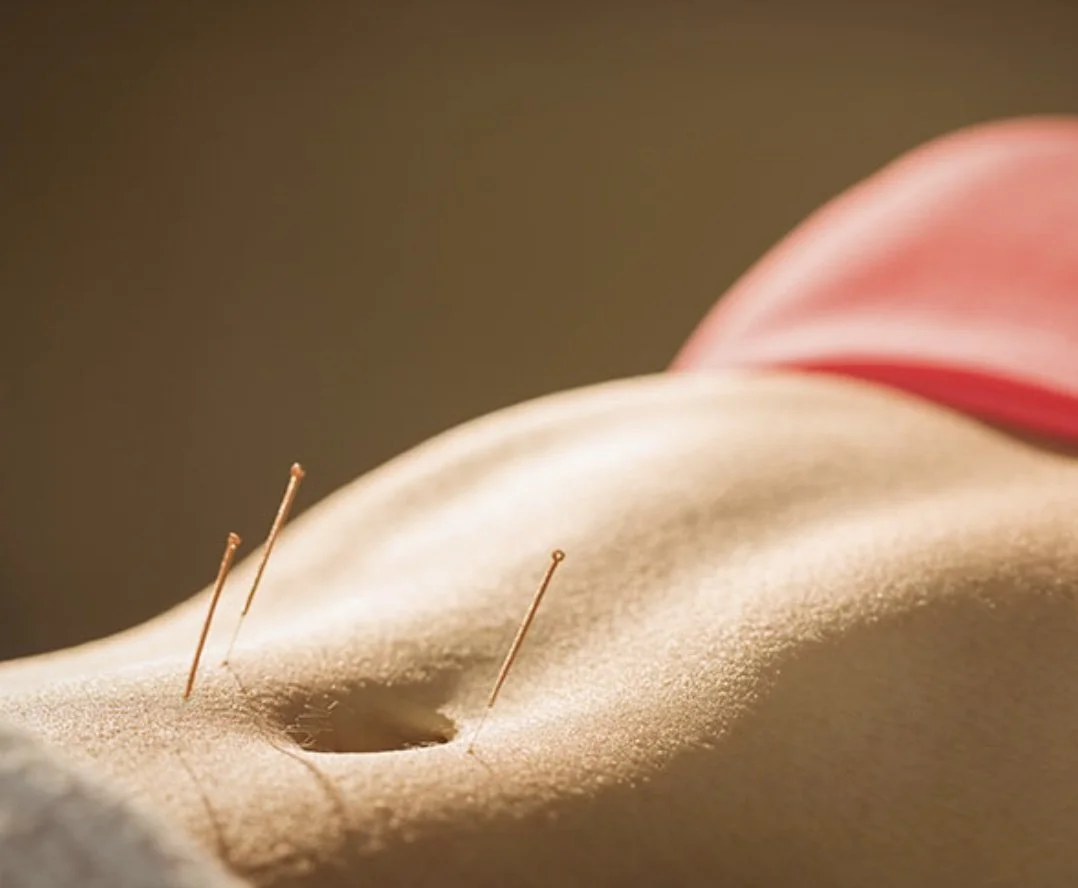
BBT charting: what it is, how to do it, and what it tells you about your fertility
If you have started working with a Chinese medicine practitioner for fertility support, there is a good chance you have been asked to chart your basal body temperature. If you are new to the idea, this post explains what BBT charting is, how to do it correctly, and why the information it gives you is genuinely useful on your path to conception.
What is BBT charting?
Basal body temperature is the lowest temperature your body reaches during rest. It is measured first thing in the morning, before you get out of bed, speak, or do anything at all. It is slightly different from your regular temperature and requires a more sensitive thermometer to detect the very small changes that matter.
The reason it is useful for fertility is straightforward. After ovulation, the hormone progesterone causes your body temperature to rise and stay elevated for the remainder of the cycle. Before ovulation, under the influence of oestrogen, your temperature sits lower. By recording your temperature every morning over several cycles, a clear two-phase pattern begins to emerge: a lower phase in the first half, a shift upward around ovulation, and a sustained higher phase through the second half until your period arrives.
This two-phase pattern is one of the most reliable indicators that ovulation has occurred.
How to do it
The key is consistency. Small variations in how you take the measurement can affect the reading, so following the same routine each day is important.
Take your temperature at the same time every morning, ideally within 30 minutes of your usual wake time. Even waking earlier than normal can shift the reading slightly. Use a dedicated basal thermometer rather than a standard household one. Basal thermometers measure to two decimal places, which is necessary because the changes you are tracking are small. Oral measurement is the most straightforward method.
Take your temperature before sitting up, drinking anything, or talking. Keep the thermometer on your bedside table so you can reach it without much movement. Record the reading immediately, either in a dedicated app such as Fertility Friend, which is free at its basic level, or on a paper chart. If something disrupts a reading, such as illness, a late night, alcohol, travel, or significant stress, note it on the chart rather than leaving a blank. That context is useful information in itself.
You need at least two to three full cycles before clear patterns emerge, though many women begin to recognise the two-phase shift within their first cycle of charting.
What a healthy chart looks like
In a typical cycle, the follicular phase temperature, which is the first half before ovulation, sits at around 36.2 to 36.5 degrees Celsius. After ovulation there should be a clear rise of at least 0.2 degrees, reaching a sustained luteal phase temperature of roughly 36.5 to 36.8 degrees. This higher temperature should hold for 12 to 14 days before dropping in the one or two days before your period arrives.
If the temperature stays elevated beyond that and your period does not come, a sustained rise can sometimes be an early sign of pregnancy, though it is not a reliable pregnancy test on its own.
What BBT charting tells you that other tools do not
This is where the real value lies. Having a period does not tell you whether you ovulated. Many women have regular bleeds without releasing an egg, a pattern called an anovulatory cycle. BBT charting is one of the few affordable, accessible tools that can reveal this. Over several cycles it can show whether ovulation is occurring consistently, whether it is happening at a similar point each cycle, how long the second half of your cycle is, and whether the temperature rise after ovulation is strong enough to suggest adequate progesterone support.
A luteal phase shorter than 10 to 12 days, or a temperature that rises but drops away quickly before the expected end of the cycle, can be an indicator of low progesterone. This is worth knowing, both for the conversation you have with your GP and for guiding a Chinese medicine treatment approach.
One important limitation to understand
BBT confirms that ovulation has already happened. It does not predict when it is about to occur. The temperature rise happens after the egg has been released, not before. This means charting is a retrospective tool and works best as a way of building up a picture of your cycle over time rather than as a day-by-day guide to timing.
Why charting matters even if you are doing IVF
Many women assume that once they enter an IVF program, natural cycle tracking becomes irrelevant. Several cycles of BBT data before a treatment cycle can still give your practitioner valuable information about the quality of your hormonal environment, particularly the function of the second half of your cycle. This can inform how Chinese medicine treatment is structured in the weeks before retrieval or transfer, with the aim of creating the best possible foundation before the cycle begins rather than simply supporting it once it is already underway.
Getting started
The investment is small. A basal thermometer costs around ten to fifteen dollars and Fertility Friend is free at its basic level. Start on the first day of your next period and record each morning. You do not need a perfect chart to bring to a consultation. Even a few cycles of data, including the disrupted readings and the irregular ones, tells a practitioner something useful. An imperfect chart is often more revealing than you might expect.
If you are already working with me and have not yet started charting, this is a good time to begin. If you have charts from previous cycles, bring them. They are one of the most clinically useful tools available and the information in them belongs to you.
Considering Chinese medicine as part of your fertility journey?
Every situation is different. A one-on-one consultation allows us to review your health history, cycle patterns, and any existing medical investigations to discuss whether — and how — Chinese medicine might complement your care.
Regulatory & professional disclosure
This blog post is for general educational purposes only. It does not constitute medical or health advice and should not be relied upon as a substitute for professional medical assessment. Individual results vary and cannot be guaranteed or predicted. The research cited represents the current state of published literature; Chinese medicine treatment is individualised and outcomes depend on many factors specific to each person. Sandra Cant is an AHPRA-registered acupuncturist and Chinese medicine practitioner. This content has been prepared in accordance with the Health Practitioner Regulation National Law advertising requirements. No testimonials have been included. Claims in this post are supported by peer-reviewed published research referenced within the text.
Key references:
Chen et al. (2024). Effects of acupuncture on pregnancy outcomes in women undergoing in vitro fertilization: an updated systematic review and meta-analysis. Archives of Gynecology and Obstetrics, 309(3), 775–788.
Wang et al. (2024). The timing and dose effect of acupuncture on pregnancy outcomes for infertile women undergoing IVF-ET: a systematic review and meta-analysis. Journal of Integrative and Complementary Medicine, 30(11), 1031–1046.
Ried K & Stuart K (2015). Chinese herbal medicine for female infertility: an updated meta-analysis. Complementary Therapies in Medicine, 23(1), 116–128.
Dong et al. (2022). Systematic review and meta-analysis of traditional Chinese medicine compound in treating infertility caused by endometriosis. Annals of Palliative Medicine.
Yang et al. (2023). Efficacy of Chinese herbal medicines on pregnancy outcomes in patients with endometriosis in long-term management. Chinese Journal of Integrative Medicine, 29(11), 971–979.
Mo et al. (2023). Effectiveness of traditional Chinese medicine formulas combined with acupuncture in the treatment of ovulation dysfunction infertility. Medicine, 102(27).
Zhou et al. (2024). Acupuncture for the treatment of male infertility. Biomedical Journal of Science & Technology Research.
Tian et al. (2024). Trends in acupuncture for infertility: a scoping review with bibliometric and visual analysis. Frontiers in Endocrinology, 15, 1351281.