Acupuncture & Fertility
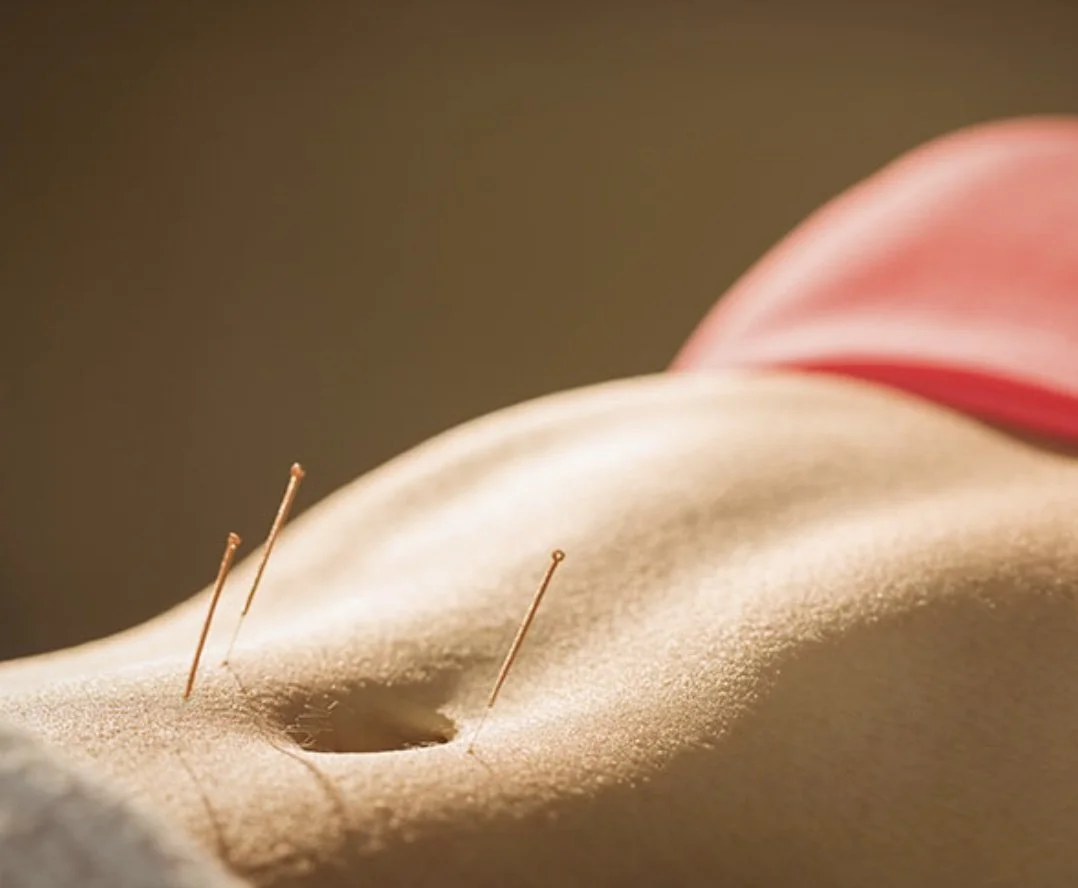
Acupuncture as a form of fertility support is becoming an increasingly prominent area within alternative medicine.
For many people navigating the complex and often emotionally exhausting path of trying to conceive, Chinese medicine offers a thoughtful, whole-person approach. But does the research support it? Here's an honest look at what the evidence currently shows.
Acupuncture and Chinese herbal medicine have been used to support reproductive health for thousands of years. In recent decades, researchers have begun investigating these approaches using modern clinical methods and while the evidence base is still developing, there are areas where findings are genuinely encouraging.
As an AHPRA-registered acupuncturist and Chinese medicine practitioner, my role is to share what the research actually says, including its limitations, so that you can make informed decisions about your care.
What does the research show?
The strongest body of evidence relates to acupuncture as an adjunct to IVF (in vitro fertilisation), and to Chinese herbal medicine for broader female fertility challenges. Here is a summary of recent findings from peer-reviewed literature.
Acupuncture alongside IVF
A 2024 updated systematic review and meta-analysis published in the Archives of Gynecology and Obstetrics, drawing on 25 randomised controlled trials and 4,757 participants, found that acupuncture was associated with meaningfully improved outcomes for women undergoing IVF.
43.6%
Clinical pregnancy rate in acupuncture groups
vs 33.2% in control groups — Chen et al., 2024 meta-analysis (25 RCTs, 4,757 participants)
38.0%
Live birth rate in acupuncture groups
vs 28.7% in control groups — same review, noting ongoing need for further research
A separate 2024 meta-analysis in the Journal of Integrative and Complementary Medicine (38 RCTs, 5,991 participants) found that acupuncture performed during the controlled ovarian hyperstimulation phase of IVF was associated with a significantly increased clinical pregnancy rate (relative risk 1.33; 95% CI: 1.07–1.65). Timing appears to matter. This is an area where individualised, cycle-phased treatment planning is important.
Research suggests acupuncture during IVF may be associated with higher pregnancy and live birth rates, though further large-scale studies are needed to confirm optimal protocols. Chen et al., Archives of Gynecology & Obstetrics, 2024
Chinese herbal medicine for female infertility
A widely cited meta-analysis by Ried & Stuart (2015), drawing on 40 randomised controlled trials involving 4,247 women, found that Chinese herbal medicine was associated with approximately twice the pregnancy rate of Western fertility drug therapy alone over a 3–6 month period with a mean pregnancy rate of 60% in the herbal medicine group compared to 33% in the Western medicine group. Fertility indicators including ovulation rates, cervical mucus quality, and endometrial thickness were also positively influenced.
It is important to note that this review predates current methodological standards, and the evidence base, while promising, continues to evolve. More rigorously controlled trials are needed before definitive conclusions can be drawn.
Specific conditions
Areas where research is emerging
Endometriosis-related infertility: A meta-analysis published in the Annals of Palliative Medicine (2022) found that Chinese herbal compounds were associated with a significantly higher pregnancy rate compared to control groups (OR 1.94; 95% CI: 1.50–2.50), and a notably lower miscarriage rate. A 2023 multicenter cohort study from Beijing also found that long-term Chinese herbal medicine use was associated with improved pregnancy and live birth outcomes in women with endometriosis.
PMOS and ovulatory dysfunction: Research suggests that Chinese herbal formulas combined with standard medications such as letrozole may support higher ovulation and pregnancy rates compared to medication alone. A 2023 meta-analysis of 21 studies found that TCM formula combined with acupuncture improved outcomes in ovulation dysfunction infertility. Results across studies are mixed and more high-quality evidence is needed.
Male factor infertility: A 2024 systematic review found acupuncture may be associated with improvements in sperm parameters including motility, with no significant increase in adverse effects compared to conventional treatment. Larger, more rigorous trials are still required.
How Acupuncture and Chinese Medicine May Support Fertility
Research suggests acupuncture may play a role in hormonal regulation by influencing gonadotropin-releasing hormone (GnRH), a signalling hormone produced in the brain that triggers the release of the hormones responsible for ovulation and menstrual cycle regulation. Studies have also observed potential improvements in blood flow to the uterus and endometrium, the lining of the uterus where a fertilised egg implants. Adequate blood flow to this tissue is considered important for receptivity and implantation.
In the context of IVF, some research indicates that Chinese herbal medicine may support egg quality and endometrial thickness, two factors that can influence treatment outcomes. This body of research is still evolving, and findings should be understood as preliminary rather than conclusive. However, they do provide a plausible basis for incorporating acupuncture and Chinese herbal medicine as adjunctive support alongside conventional fertility treatment.
From a Chinese medicine perspective, no two patients are treated the same way. A registered practitioner will conduct a thorough assessment to identify the underlying patterns driving your presentation. These might include Kidney deficiency, which can affect reproductive reserve and hormonal balance; Blood stagnation, which may impair circulation to the reproductive organs; or Spleen Qi insufficiency, which influences the production and quality of Blood and body fluids. Treatment, including both acupuncture point selection and herbal prescribing, is then tailored to your individual pattern and adapted across the different phases of your menstrual cycle.
What the Research Does Not Yet Tell Us
Transparency about the limits of current evidence is just as important as presenting what the research shows. Many studies in this area involve small sample sizes, inconsistent methodology, and treatment protocols that vary enough between studies to make direct comparisons difficult. The Cochrane Collaboration, one of the most respected bodies in evidence-based medicine, has reviewed the use of Chinese herbal medicine for subfertile women with PCOS and found that while results are promising, the evidence specifically supporting improvements in live birth rates remains insufficient to draw firm conclusions.
This does not mean the research is without value. It means the findings should be interpreted carefully, and that Chinese medicine is best understood as one part of a considered approach to fertility support rather than a standalone solution for every presentation.
There are also situations where medical intervention is not optional. Conditions such as severe male factor infertility, blocked fallopian tubes, or significantly diminished ovarian reserve generally require reproductive medicine, and no responsible practitioner would suggest otherwise. In these contexts, acupuncture and Chinese herbal medicine are most appropriately used as a complementary layer of support alongside that medical care, not as a replacement for it.
Why registration matters
In Australia, Chinese medicine practitioners are regulated by AHPRA (the Australian Health Practitioner Regulation Agency) under the Chinese Medicine Board of Australia. This means AHPRA-registered practitioners have met nationally recognised standards for education, clinical training, and ongoing professional development.
This is significant for patient safety. An AHPRA-registered acupuncturist is trained to recognise when a presentation requires referral to a medical practitioner, understand herb-drug interactions, and work collaboratively within an integrated care model.
Considering Chinese medicine as part of your fertility journey?
Every situation is different. A one-on-one consultation allows us to review your health history, cycle patterns, and any existing medical investigations to discuss whether and how Chinese medicine might complement your care.
Regulatory & professional disclosure
This blog post is for general educational purposes only. It does not constitute medical or health advice and should not be relied upon as a substitute for professional medical assessment. Individual results vary and cannot be guaranteed or predicted. The research cited represents the current state of published literature; Chinese medicine treatment is individualised and outcomes depend on many factors specific to each person. Sandra Cant is an AHPRA-registered acupuncturist and Chinese medicine practitioner. This content has been prepared in accordance with the Health Practitioner Regulation National Law advertising requirements. No testimonials have been included. Claims in this post are supported by peer-reviewed published research referenced within the text.
Key references:
Chen et al. (2024). Effects of acupuncture on pregnancy outcomes in women undergoing in vitro fertilization: an updated systematic review and meta-analysis. Archives of Gynecology and Obstetrics, 309(3), 775–788.
Wang et al. (2024). The timing and dose effect of acupuncture on pregnancy outcomes for infertile women undergoing IVF-ET: a systematic review and meta-analysis. Journal of Integrative and Complementary Medicine, 30(11), 1031–1046.
Ried K & Stuart K (2015). Chinese herbal medicine for female infertility: an updated meta-analysis. Complementary Therapies in Medicine, 23(1), 116–128.
Dong et al. (2022). Systematic review and meta-analysis of traditional Chinese medicine compound in treating infertility caused by endometriosis. Annals of Palliative Medicine.
Yang et al. (2023). Efficacy of Chinese herbal medicines on pregnancy outcomes in patients with endometriosis in long-term management. Chinese Journal of Integrative Medicine, 29(11), 971–979.
Mo et al. (2023). Effectiveness of traditional Chinese medicine formulas combined with acupuncture in the treatment of ovulation dysfunction infertility. Medicine, 102(27).
Zhou et al. (2024). Acupuncture for the treatment of male infertility. Biomedical Journal of Science & Technology Research.
Tian et al. (2024). Trends in acupuncture for infertility: a scoping review with bibliometric and visual analysis. Frontiers in Endocrinology, 15, 1351281.